
Flippy Knife: 3D flipping game
Beresnev GamesArcade
4.361.36K Reviews
- Version
- 2.3.14
- Installs
- 10.00M
- Age Rating
- Everyone
Screenshots
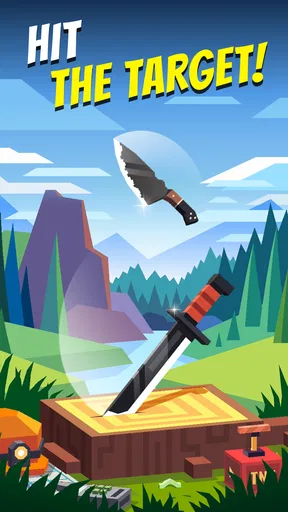
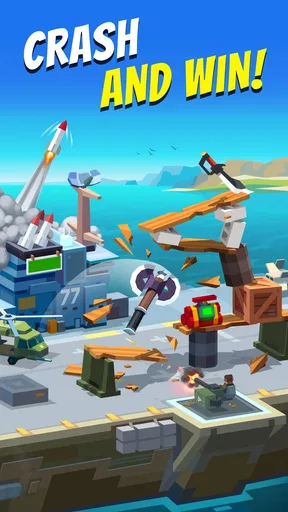
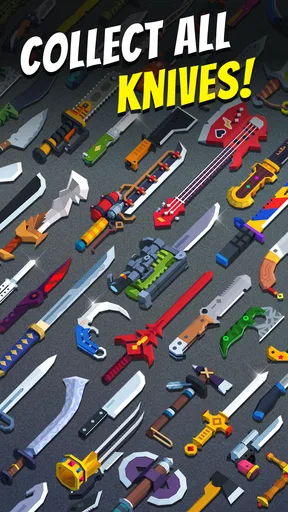
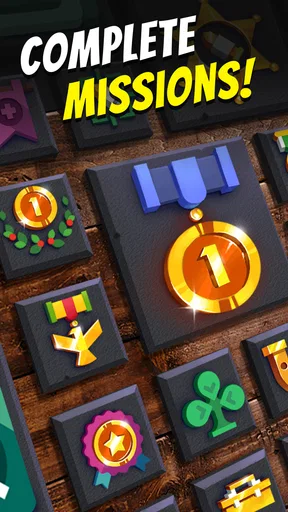
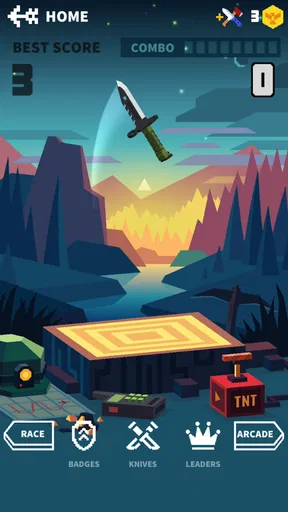

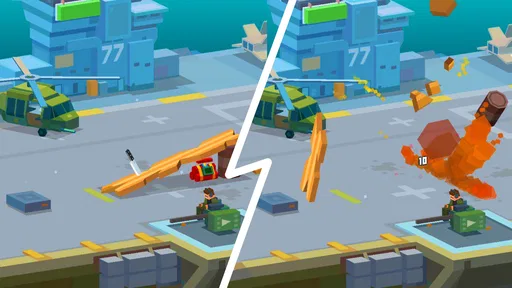
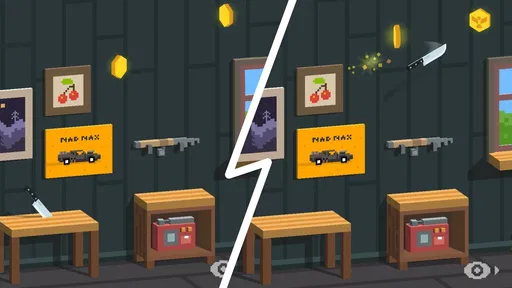
Our Review of Flippy Knife: 3D flipping game
 Analysis by Appyee
I downloaded Flippy Knife expecting a quick arcade distraction, and that is exactly where it makes its strongest first impression. The basic idea is easy to understand: control a knife in midair, land it cleanly, and keep working toward the target. The appeal comes from the tiny gap between a satisfying landing and an awkward miss. It feels simple enough to start immediately, but precise enough to make one more attempt feel justified.
That simplicity also makes the game easy to recommend for short breaks. I can play it while waiting for an appointment, during a commute, or when I want something active without learning a complicated control system. Beresnev Games keeps the focus on arcade timing rather than a long story or a large collection of rules. The result is a game that becomes understandable within minutes, although understanding it is not the same as mastering it.
Why the first week feels so rewarding
The opening sessions are driven by a clear feedback loop. I throw, watch the rotation, adjust my timing, and immediately see whether the correction worked. That direct connection between touch and result is the game’s biggest strength. There is very little waiting between decisions, so a failed attempt usually feels like something I can improve rather than something I simply have to endure.
The knife-flipping theme gives the experience a distinctive identity without making it difficult to approach. This is still an arcade game at heart, but the motion adds a small physical puzzle to every attempt. I am not only trying to reach a target; I am trying to judge the rhythm of the rotation and choose the right moment to act. That makes the first week more engaging than a basic tap-to-score game.
I also like how naturally the game fits different attention levels. When I have only a minute, I can play a few attempts and stop. When I have more time, the same compact challenge can absorb me for much longer. That flexibility matters because it prevents the game from demanding a large daily commitment before it becomes enjoyable.
For a new player, my practical advice is to avoid frantic tapping. The temptation is to react to every movement, but controlled timing is more useful than constant input. I found that watching one complete rotation before making a correction helped me understand the knife’s movement. That small change in approach made misses feel more informative and reduced the sense that success depended purely on luck.
The game is free to download, which makes trying it straightforward. It is rated for Everyone, so its presentation is accessible to a broad audience. Its average rating is 4.3 from around 858 thousand ratings, and the audience size makes sense: the controls are approachable, the rounds are easy to start, and the central challenge does not require specialist gaming knowledge.
Still, the first-week appeal depends heavily on whether you enjoy repetition. If you like practicing a small skill until your hands become more consistent, the opening feels satisfying. If you prefer constant story progress, exploration, or new objectives every few minutes, the narrow focus may become apparent quickly. This is not a game that hides its core activity; it asks you to enjoy refining it.
What makes the short sessions work
The best everyday use case is a short reset between tasks. I would use it after finishing a work message or while waiting for food, because the game offers a clear beginning and end to each attempt. It does not require me to remember a plot or rebuild a complicated strategy after putting the phone down. That makes it more convenient than many larger arcade or action games when my attention is divided.
There is also value in treating each session as a small practice exercise instead of a score chase. I found it more enjoyable when I focused on improving one part of my timing rather than expecting every run to be perfect. That approach is especially useful for younger players or casual users who may become frustrated by repeated misses. The game rewards patience, but it does not automatically teach patience unless the player chooses that mindset.
On Android, the stated minimum operating system is version 7.0, while the current version is 2.3.14. Those details make it relevant to people using older compatible devices, although the actual feel will still depend on the phone’s touch response and screen condition. A worn or inconsistent touchscreen can make a timing-based game seem less fair than it really is, so I would not judge the controls after playing on hardware that already misses ordinary taps.
Whether the game keeps its place after the novelty
The more difficult question is what happens after the first burst of curiosity. The flipping concept is memorable, but a memorable concept alone does not guarantee lasting value. After the initial sessions, the game becomes a test of personal tolerance for repetition. I kept returning when I wanted a compact challenge, but I did not feel the same pull every day. That is an important distinction: it works well as a game I revisit, not necessarily as the only arcade game I keep open.
Month to month, its value comes from convenience and skill refinement rather than a broad stream of new experiences. If you enjoy seeing your timing become more reliable, the game can remain useful as a small practice habit. It is similar to keeping a simple reflex exercise on your phone: the reward is not a dramatic change in the game world, but the feeling that your own control is improving.
Compared with endless runners, this game feels less dependent on memorizing a route or reacting to a constantly moving environment. Compared with physics puzzle games, it gives me less room to plan several steps ahead. Its challenge sits in the middle: immediate enough for arcade play, but precise enough to punish careless timing. I prefer it to an endless runner when I want a focused action, while I would choose a puzzle game when I want deeper planning and more varied problem solving.
That comparison also explains who should skip it. Players looking for character development, a substantial campaign, multiplayer competition, or a large strategic system will probably find the experience too concentrated. The game is better suited to someone who appreciates a repeatable mechanical challenge. It earns recurring use through accessibility, not through a promise of a constantly expanding world.
The free entry point helps with that decision. I can test the central mechanic without committing money first, which is useful because the game’s long-term fit is personal. In-app purchases range from $0.99 to $59.99 per item, so I would approach optional spending carefully and decide whether it genuinely improves my enjoyment rather than buying simply because a short session went badly.
How to build a healthier play habit
My most useful routine was to stop after a small number of unsuccessful attempts instead of immediately chasing the lost run. Timing games can turn a brief break into an irritating loop when I continue playing only to undo frustration. Putting the phone down for a few minutes often made the next session feel cleaner. That is not a feature of the software, but it is a practical way to protect the game’s strongest quality: quick, low-pressure entertainment.
I would also separate practice sessions from score sessions. During practice, I concentrated on the moment of release and accepted imperfect results. During a score attempt, I tried to preserve a calm rhythm. Mixing those goals made every miss feel like a failure, while separating them gave each session a clearer purpose. This is a small but meaningful difference for anyone hoping to keep the game installed beyond the first week.
Another useful habit is to play with a stable grip and the phone resting securely in the hand. Because the action depends on touch timing, accidental movement can make a good attempt harder to repeat. I found that using the same posture each time made my results easier to interpret. If I changed grip, angle, and tapping style together, I could not tell which adjustment had helped or hurt.
These habits reveal a trade-off. The game is easy to enter, but long-term enjoyment benefits from a little self-imposed structure. Without that structure, the quick retry cycle can become mindless. With it, the same cycle becomes a compact way to practice attention and timing.
Where fatigue begins
The central source of fatigue is repetition. The knife-flipping action is satisfying, but it remains the center of the experience, so the novelty can fade for players who need frequent mechanical change. I noticed that the game feels freshest when I return after a gap rather than forcing a long session. That makes it a good resident of a rotation of casual games, but a weaker choice for someone seeking an all-evening arcade marathon.
Misses can also become tiring when the player is unsure whether the problem was timing, positioning, or an input error. In a precision game, clarity matters as much as difficulty. When I understood why an attempt failed, I wanted to try again. When the result felt ambiguous, another attempt felt less rewarding. The best way to manage that friction is to slow down and change only one part of the technique at a time.
Optional purchases may add another layer of hesitation. A free game is easy to sample, but the presence of items priced from less than a dollar to $59.99 means I would not treat every offered purchase as automatically good value. The right question is whether the item supports the way I already play. If I am only using the game for occasional breaks, spending may be unnecessary; if I return regularly, I would still want to consider each purchase separately rather than buying impulsively after a frustrating run.
There is also a maintenance burden, even though it is lighter than in a large live-service game. Keeping a small arcade title installed means accepting that its value depends on my continued interest in the same basic interaction. I do not need to manage a large collection of characters, complex resources, or lengthy daily tasks, which is a genuine advantage. However, I also should not expect the game to create a new reason to play every time I open it.
That balance is why I would not describe it as a universal long-term recommendation. It has enough immediate charm to justify a place on many phones, but its staying power is strongest for people who enjoy repetition with gradual improvement. If my priority were variety, I would choose a broader arcade collection. If my priority were a quick test of timing, this game would be the more focused option.
Who gets the most from it
I think it suits casual players who want an uncomplicated challenge, families looking for an Everyone-rated game, and experienced mobile players who enjoy polishing a small skill. It is also a sensible choice for people who dislike tutorials that take longer than the game itself. The basic interaction is understandable almost immediately, and the player can decide independently how seriously to pursue improvement.
I would be more cautious about recommending it to someone who becomes easily annoyed by repeated failure. The game’s appeal depends on accepting that a miss is part of the process. It is not the right choice for a player who wants every attempt to deliver visible progress, a new story beat, or a fresh environment. Those players may find a level-based puzzle game more rewarding because each completed stage offers a stronger sense of closure.
For parents, the Everyone rating makes the game broadly approachable, but the free label should not be confused with unlimited value from optional purchases. I would still review spending settings on the device before handing it to a child. That is a sensible precaution for any free game with in-app items, especially when the available purchase range extends from $0.99 to $59.99 per item.
My long-term verdict
After the first-week excitement settles, Flippy Knife earns its place through its compact control challenge rather than through endless novelty. I like that I can open it for a brief break, understand the objective instantly, and leave without feeling that I have abandoned a complicated session. Beresnev Games has built a focused arcade game, and that focus is both its identity and its limitation.
The game has reached over 10 million installs, which reflects how naturally its premise fits mobile play. I can see why it attracts a broad audience: it is free, quick to learn, and satisfying when a difficult landing finally works. Yet popularity does not change the central trade-off. The more I play, the more the experience depends on whether I personally enjoy repeating the same kind of timing challenge.
My recommendation is to install it if you want a lightweight game for short sessions and you enjoy improving through repetition. Give it a fair trial over several brief plays rather than judging it from one lucky attempt or one frustrating streak. If the control rhythm feels rewarding, it can remain a dependable break-time game. If the repetition already feels tiring, no amount of forcing a daily habit will make it a better fit.
For me, the lasting value is real but selective. I would keep it available as part of a small rotation, not rely on it as my main mobile game. Its strongest quality is the honest simplicity of its challenge; its main weakness is that the same simplicity can limit long-term variety. Best for quick practice, focused arcade sessions, and players who enjoy mastering timing; less suitable for anyone seeking story, exploration, or constant change.
Verdict
Strengths of Flippy Knife: 3D flipping game
- Simple one-touch controls are easy to learn.
- Many knife models and skins add variety to gameplay.
- Short rounds make it ideal for quick gaming sessions.
- Accurate throws feel satisfying when timing is mastered.
- Works well for casual players seeking a relaxing challenge.
Limitations of Flippy Knife: 3D flipping game
- Progress can feel repetitive after extended play.
- Some upgrades and cosmetic items require significant grinding.
- Missed throws may feel frustrating when timing changes quickly.
- The physics can occasionally seem inconsistent during tricky flips.
- Ads may interrupt gameplay, especially between short rounds.
Other Releases by Beresnev Games
View All
Race Master 3D: Car Racing
Racing4.6
Similar Picks in This Category
View All
Subway Surfers
SYBO Games4.6

Stickman Party 234 MiniGames
PlayMax Game Studio4.6

Subway Princess Runner
Ivy4.4

Temple Run
Imangi Studios4.2

Zombie Tsunami
Mobigame SAS4.6

Stack Ball - Crash Platforms
CASUAL AZUR GAMES4.5
Frequently Asked Questions
What is Flippy Knife: 3D flipping game?
Flippy Knife: 3D flipping game is a physics-based arcade title focused on throwing and flipping knives through different environments. The main challenge is to control each throw, make successful rotations, and land the knife safely. It combines simple one-touch controls with increasingly demanding levels, making it easy to start but progressively harder to master.
How do you play Flippy Knife: 3D flipping game?
Gameplay is based on timing and swipe control. You generally swipe or tap to launch the knife, then carefully manage its rotation so the blade lands correctly on a platform or target. Each stage requires patience because throwing too early, using too much force, or misjudging the angle can make the knife fall and force you to try again.
Is Flippy Knife: 3D flipping game free to download?
Flippy Knife: 3D flipping game is typically available as a free download, allowing players to try its core gameplay without paying upfront. However, the experience may include advertisements and optional in-app purchases, such as extra knives, currency, upgrades, or other convenience items. Availability and pricing can vary depending on the Android or iOS store.
Does the game require an internet connection?
Many of the basic flipping challenges can usually be played offline, which makes Flippy Knife: 3D flipping game suitable for short sessions while traveling or when mobile data is unavailable. Nevertheless, an internet connection may be needed for advertisements, cloud-related features, updates, leaderboards, or in-app purchases. It is best to check the current store description for the latest requirements.
Is Flippy Knife: 3D flipping game suitable for children?
The game is straightforward to understand and does not require complicated reading or controls, so younger players may enjoy its arcade-style challenges. Parents should still review the listed age rating and privacy information because the app may contain advertising, optional purchases, or links to online services. If children use the game, enabling purchase restrictions is recommended.
Play our best games!


